
Emissions increasing, biogas potential and learning from pachyderms

In this issue:
Emissions to increase
Despite the unrelenting growth of renewables, the IEA is predicted emissions from electricity generation will grow in 2026, up around 1%, before flattening again in 2027. The increase is attributable to a predicted increase in demand of 3.6% and while renewables have satisfied the majority of the increase, renewable growth hasn’t quite kept pace with demand growth. The picture for 2027 is even higher demand growth at 3.7% but the expectation is renewable growth will be able to satisfy all of this. 2026 is expected to see renewables become the largest fuel source of electricity generation.
Electricity prices falling in Australia
Wholesale electricity prices for the June quarter in Australia were the lowest in 6 years and 47% down on the previous year’s corresponding quarter, despite record high demand. The falls are attributed to growth in grid and domestic scale solar and strong wind output. Prices were also stable with only South Australia seeing material volatility during a brief, 2-day wind drought in June. Coal and gas based generation dropped. Lessons, then, for NZ on renewables build and its impact on wholesale prices.
Biogas potential
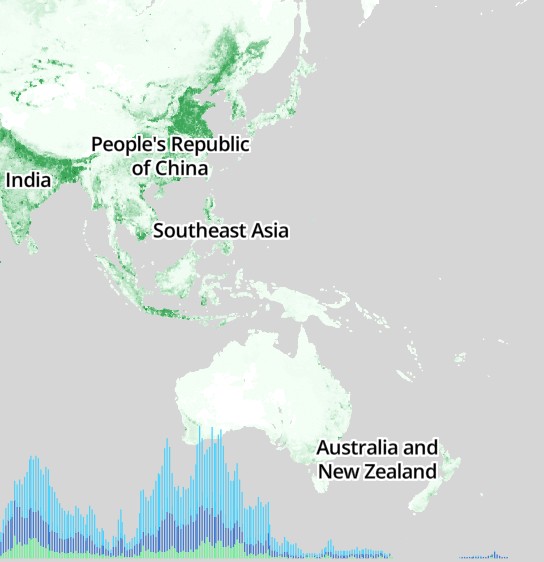
Biogas and biomethane are not always at the forefront of discussions on renewables, with solar and wind commonly stealing the limelight. However, the IEA has recently published an interactive, world map of biogas potential that covers over 40 types of feedstock, across the broad categories of crop residues, animal manure, biowaste and woody biomass. Feedstock that directly competes with food or animal feed production has been excluded.
Battery storage charging ahead
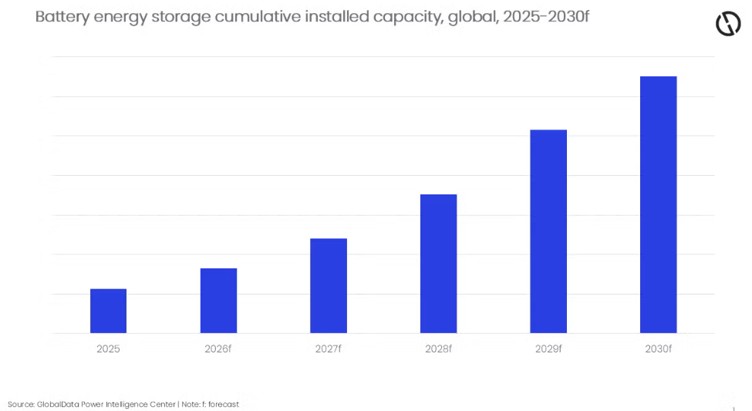
The capacity of global battery storage is set to increase by a factor of six over the next five years, according to a new report from GlobalData, that’s a compound annual growth rate of 42%. The report also confirms co-locating renewable generation and storage, to combat intermittency and price volatility, is now the norm .
Climate Active to wind down
Australian Government supported Climate Active is to be discontinued. Climate Active was set up in 2010 as the National Carbon Offset Standard and has operated to certify businesses reaching credible levels of carbon neutrality. The Government has now determined there is less need to certify voluntary climate action and so the scheme has entered a phased wind down with certifications ending in June 2027.
3.3 million years in the making
Scientists from the Federal University of Minas Gerais (Brazil) have mapped changes in tropical vegetation over the past 3.3 million years to come up with an indication of what changes we might expect over the next 15. Their conclusion is that the magnitude of change likely in the next few decades will match that seen over a period 200,000 times longer and while fauna and flora evolved over that longer period, current biodiversity will be on the wrong end of shock treatment with many species struggling to survive. The modelling indicates the Amazon could lose a third and the Malay Archipelago 40% of their forests by 2050.
Defying the laws of physics
The world of quantum research keeps throwing up data that defies classical physics. An international group of scientists has developed a quantum heat engine that produces mechanical work and refrigeration at the same time, something the old laws would have deemed impossible.
Nature knows best
Taking inspiration from the skin of elephants, scientists from the University of Pennsylvania have developed a passive cooling system for buildings. They have designed cracked, exterior tiles to capture moisture, which then evaporates to provide a cooling effect, in the same way elephants use cracks in their thick skin to capture and evaporate water – elephants are not able to sweat for cooling because of the thickness of their skin. The trick is to create the right amount, depth and pattern of cracks so that water is retained after wetting to enable evaporation over time, rather than quick evaporation or no water retention. In testing, when the temperature beneath standard tiles reached 52C and the temperature beneath cracked, standard tiles reached 42C, the temperature beneath the designed, cracked tiles was stable at 32C.