Electric trucks prove their worth, the PV waste opportunity and naughty royals

In this issue:
Electric trucks prove their worth
A real world trial in Scotland has revealed electric trucks deliver material running cost benefits and can satisfy 95% of delivery needs at the local level. Two wholesalers took part in the trial where they were offered leases on 18-tonne electric trucks with the conclusion the eHGVs consistently matched or exceeded diesel trucks for local, multi-drop operations. One company reported savings of £10-£20 (NZ$23-$46) per 100Km, the other an annual saving of £6,630 (NZ$15,000), both at pre-conflict diesel prices. Range was rarely an issue, trial vehicles using only 36% of their capacity on average during the trial. Emissions savings were around 50 kg of CO₂ per 100 km, roughly 10-13 tonnes annually per vehicle.
Energy to waste to dollars
The solar boom is predicted to create a PV waste problem that could reach 402 million tonnes by 2060. The rapidly developing technology risks shorter than anticipated lifespans on existing equipment, as continual improvements hasten the replacement of older panels. The study, by an international team from China, Sweden and Australia, suggests the net benefit of recycling this waste could be as high as US$936 billion (NZ$1,571bn) with emissions savings of 3.32 billion tonnes of CO2e.
Carbon capture disappoints
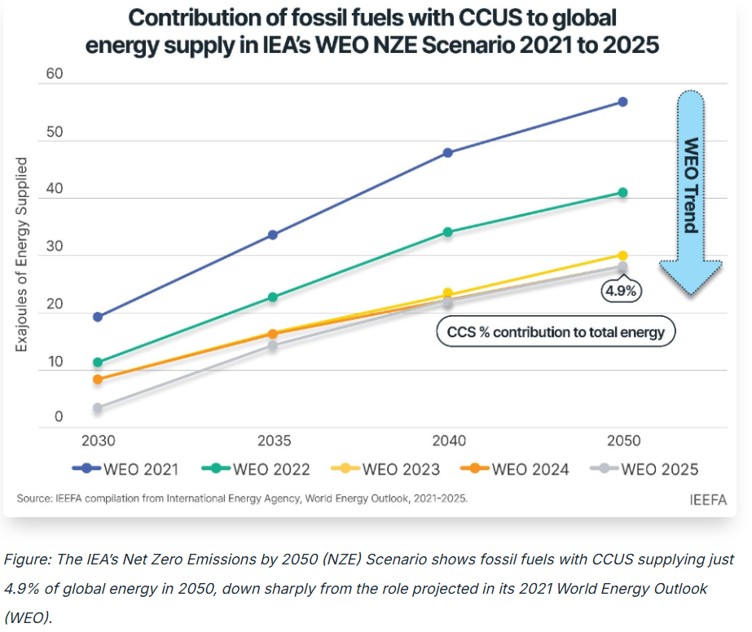
A fresh analysis of the likely contribution of carbon capture technologies in reducing global emissions provides further evidence the technology is falling behind predictions of usefulness. The analysis, by IEEFA (Institute for Energy Economics and Financial Analysis), reveals CCS technologies are failing to deliver on both technological and commercial fronts. Its conclusions are supported by a comparison of predictions on the volume of fossil fuels processed with CCS, sourced from the IEA’s World Energy Outlook since 2021.
Inefficient Royals
While the Royals’ climate consciousness and concern for sustainability are well documented, their record on energy efficiency turns out to be lacking. It seems around 20% of the rented homes across the inherited estates of King Charles and Prince William fail to meet the UK legal minimum standards for rentals. An analysis of the rentals of the Duchies of Lancaster and Cornwall and the Sandringham estate reveals over a hundred falling into the two lowest efficiency categories on the UK scale, F and G. For compliance, rentals need to be at least E but will increase to C in 2030.
Contact sweeps Excellence Awards
Contact Energy walked away with four of the ten awards available at the Energy Excellence Awards ceremony on Wednesday night, winning the Energy Retailer of the Year and Energy Project of the Year gongs, as well as the Future Force Award and the Innovation in Energy Award. Congratulations.
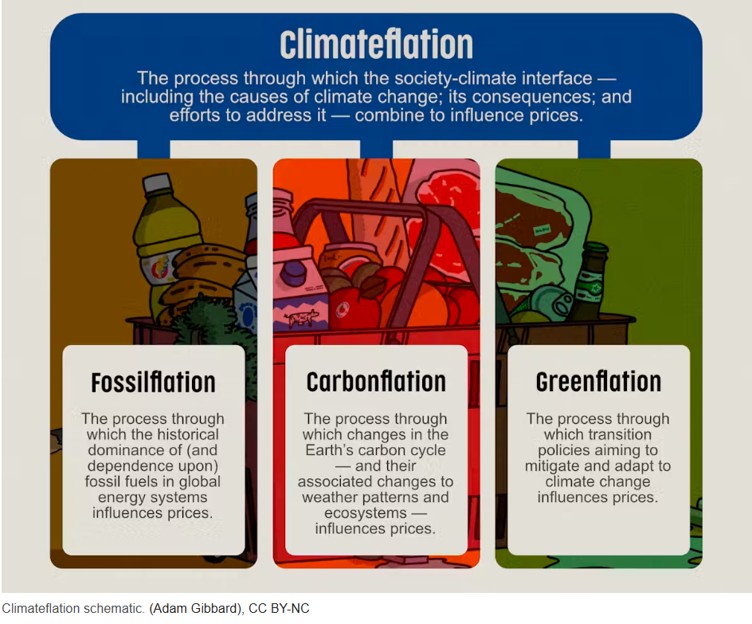
Jargon buster: Climateflation
Climateflation is where the causes, effect and attempts to mitigate and adapt to climate change combine to make life more expensive. It has three components, fossilflation, carbonflation and greenflation. You’ve got to love academics!