
An ETS that works, mobile emissions and the India FTA

In this issue:
An ETS that works
Between 2021 and 2023 the EU ETS reduced industrial emissions in the region by an average 800 million tonnes a year, a whopping 41% reduction for the period, according to a study from LSE. Emissions decreases have been significant since the scheme was launched in 2005. The researchers also conducted a comparison between sectors in and outside the EU ETS, finding the included sectors showed much stronger emissions reductions than those left out. Between 2005 and 2024, ETS sector emissions are down 50% while non ETS sector emissions are down only 17%. The EU ETS is a cap and trade system and the reductions in caps over time are now being eased, which will slow the rate of emissions reduction.
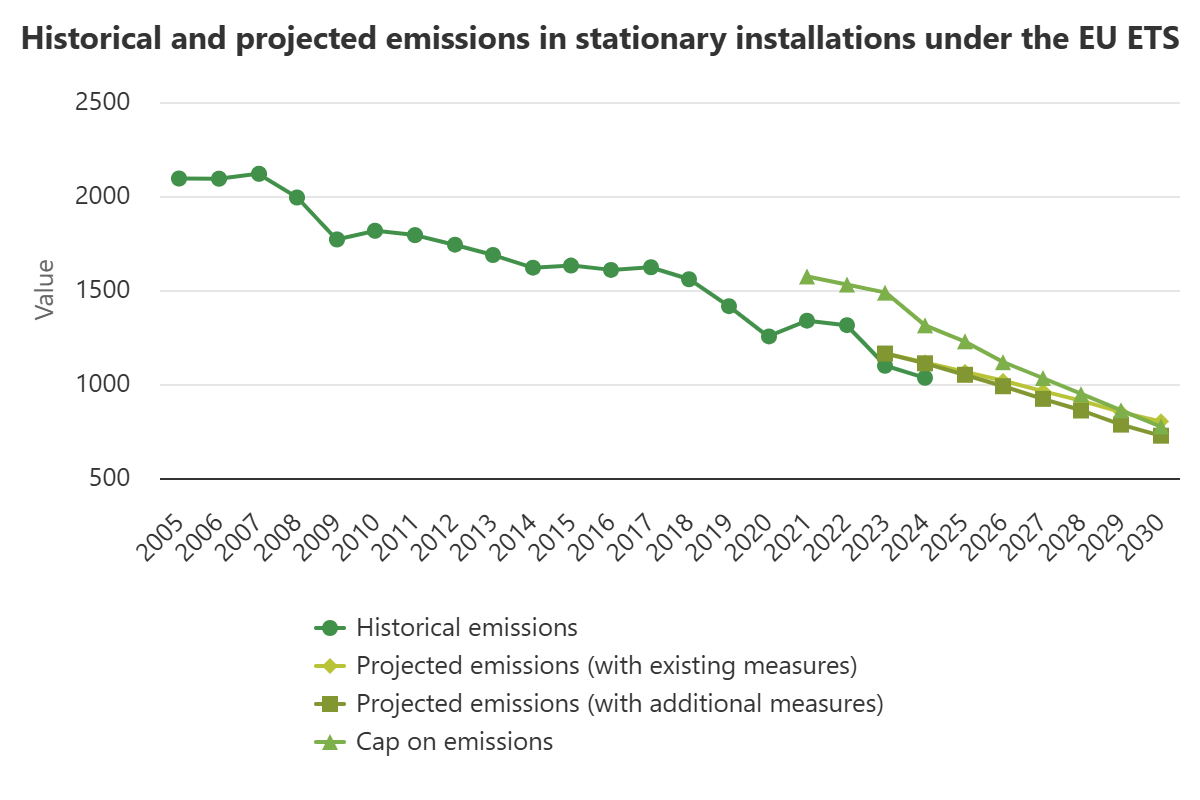
However, the EU is also introducing a new scheme (ETS2) to widen the number of sectors captured by emissions trading schemes. Most notably, ETS2 will cover the road transport and construction sectors.
Action on electrification
It’s been a busy time for EU legislators. As well as, changes to the ETS, they have also recently announced an Electrification Action Plan. The plan targets a 46% share for electricity in the energy mix by 2040, a doubling of its current 23% share. The plan has a wide remit, including actions on: the price differential between fossil fuels and electricity; grid flexibility; government procurement and developing financial mechanisms around vehicles, efficiency and renewables.
How does the India FTA stack up for the climate?
The International Institute for Sustainable Development has just published a new tool that breaks down international trade deals to allow comparisons on how they support or constrain the green transition, against criteria such as climate governance, energy and critical minerals. The NZ/India FTA is among those mapped and available for comparison.
Chart of the week
A picture paints a thousand words
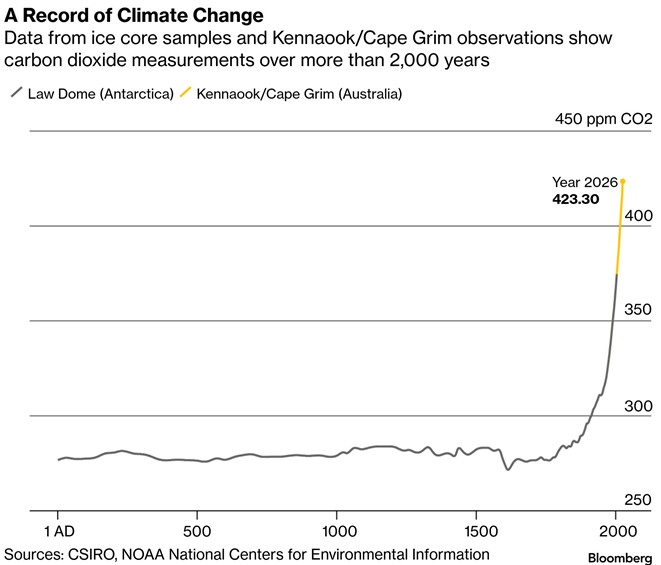
(Source: Bloomberg).
Emissions reductions on the go
Mobile network operators are celebrating reducing emissions globally by 13% since 2019, despite the number of connections increasing by 10% and the amount of data transferred quadrupling. The reduction is being underpinned by the growth in renewables and maintaining progress is dependent on the continuing availability of new, clean energy.
Everyone’s getting squeezed
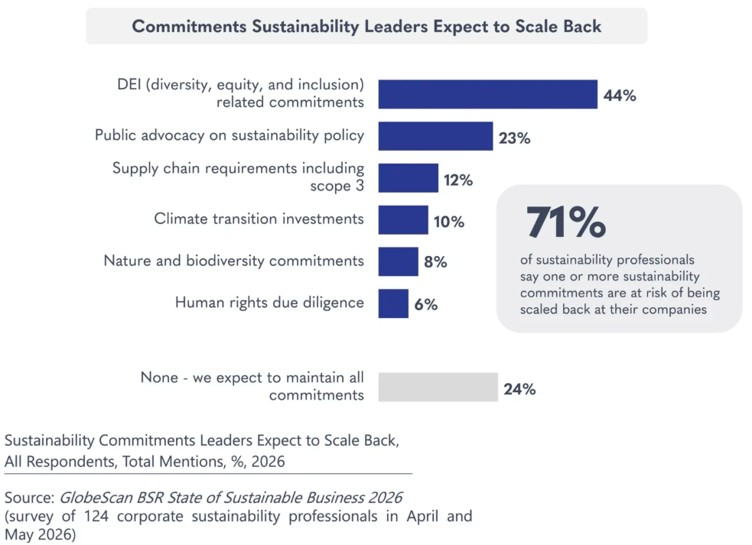
A recent analysis by Globescan tells us 71% of sustainability professionals believe they are facing a relaxation of sustainability commitments in their organisations. At most risk are commitments related to diversity, equity and inclusion but climate transition commitments are seen as at risk by 10% of the respondents. All respondents worked in organisations with at least US$1bn turnover, although the sample size is modest at 124.
Plastic fantastic
One of the costliest elements of recycling plastic is sorting the different types. A group of scientists, mostly from Ewha Womans University (South Korea), have developed a technique to generate hydrogen using mixed plastic as its feedstock, eliminating that critical cost. Alkaline Thermal Treatment can break down polyethylene terephthalate (PET), polyethylene (PE) and polypropylene (PP), the three most common plastics, in the single process. The process delivers hydrogen with 90% purity and without CO2 emissions.