
The efficiency premium, EVs more durable and powering Paris

In this issue:
EVs more durable
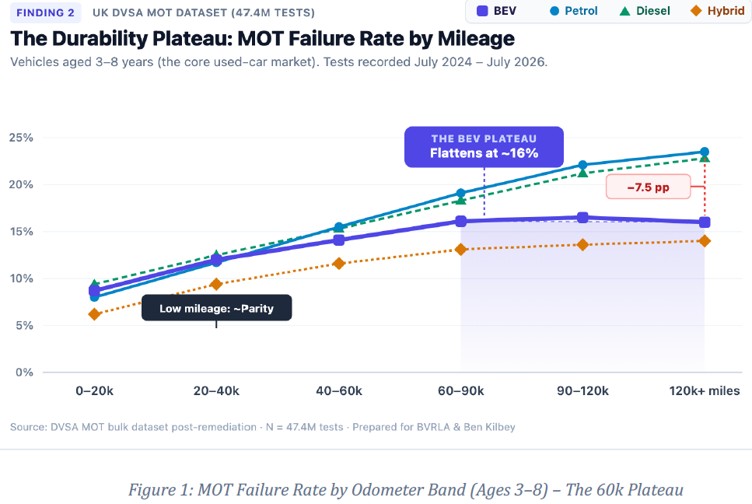
Following on from a couple of recent stories on battery life of EVs, it seems they also tend to be more durable than ICE vehicles. A study of 47.4 million MOT tests – the UK equivalent of the WoF – between July 2024 and July 2026 showed electric vehicles to be more durable at higher mileages. Up to around 40,000 miles (64,000Kms), reliability was pretty much equal but once beyond 60,000 miles (97,000Kms) the gap widened with the level of recorded mileage. While the failure rate of EVs plateaued at about 16%, that of ICE vehicles continued to increase. Hybrids seem to be the most durable, at least up to 120,000 miles (193,000 Kms).
The efficiency premium
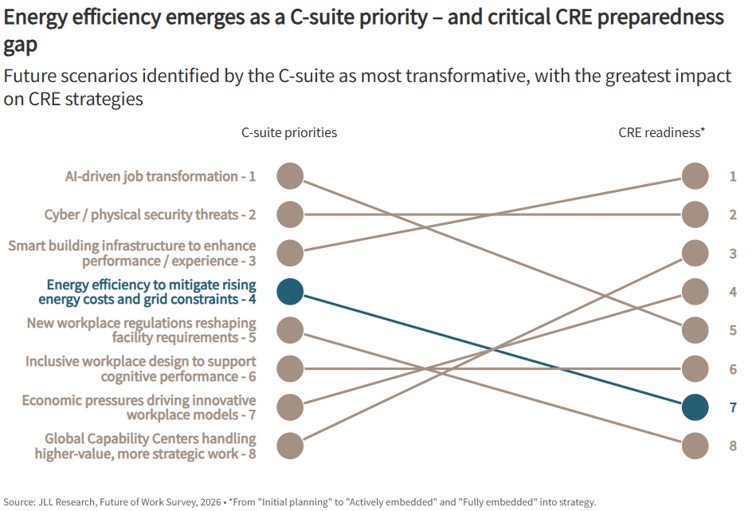
Energy costs are driving increased interest in energy efficient buildings. According to a new analysis from JLL, the most efficient buildings now cost between 43% and 75% less to run than the least efficient, depending on location. The report reveals government regulations and reporting requirements are tightening around the world in pursuit of energy resilience. Energy efficiency is ranked number four among C-suite priorities. (CRE in the chart refers to Corporate Real Estate departments)
Corporate US falls away
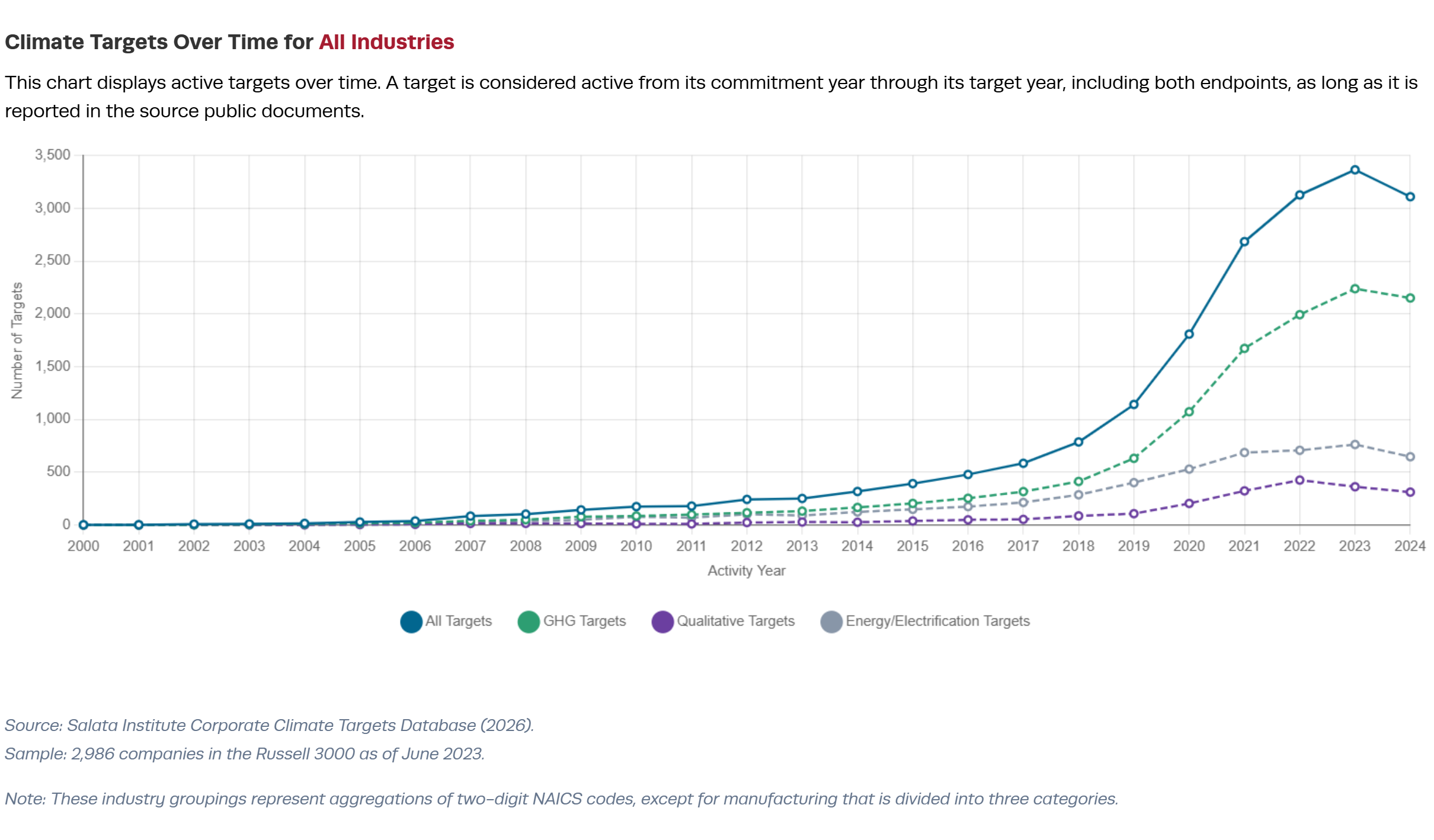
As if Trump’s anti-climate antics aren’t enough, it looks as if the reduced emphasis on climate change in the US is seeing corporate America slip on previous commitments. According to a report from Harvard University, 79 of the Russell 3,000 companies dropped climate targets between 2023 and 2024. Energy and electrification targets suffered the same fate.
Adaptation spending on the rise
A new report from Capgemini reveals corporate spending on climate adaptation is increasing with 68% of the 2,100 executives surveyed reporting their organisations were actively prioritising adaptation, up from 56% in 2025, with 83% expecting their organisations to increase adaptation spending over the next 12-18 months. Nine out of ten respondents also confirmed climate related events had disrupted their supply chains. Meanwhile, only 42% said they were on track to meet their 2030 or interim targets and the number reporting falling behind on net zero goals increased from 1% in 2025 to 11% in 2026.
Grid constraints main bottleneck for the transition
The Energy Transitions Commission has just published its 2026 Energy Transition Monitor. It reports 99% of global electricity growth was covered by renewables in 2025 and growth in solar, batteries and EVs are tracking ahead of previous expectations. This demand growth has meant, despite the renewables surge, electricity generation emissions are not yet decreasing. The report goes on to describe the energy transition as two-speed, with some sectors, such as electricity generation and transport, representing 60% of emissions, able to transition at little or no extra cost, with the remaining 40%, harder to abate sectors, lagging. Grid constraints and connectivity is proffered as the main bottleneck to further advances in electrification.
Sustainability considerations bouncing back
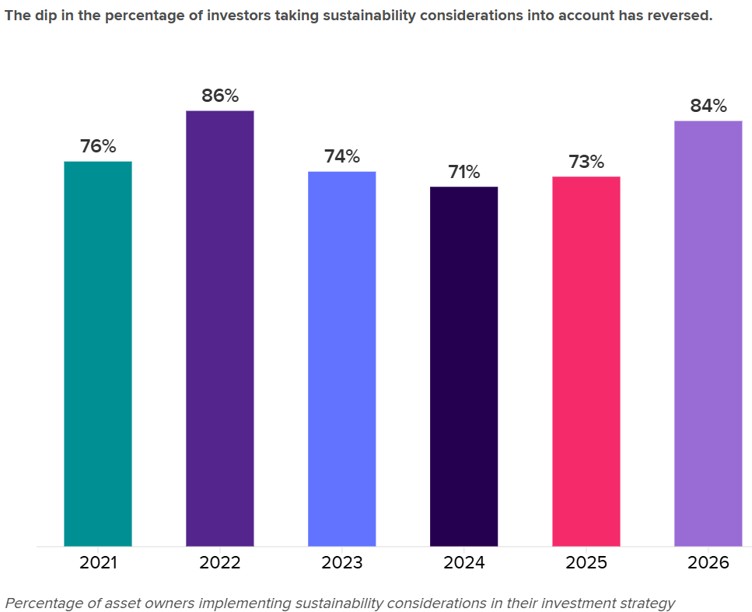
The proportion of major investors taking sustainability into account in investment decisions has lifted for the second year running following a downturn from 2022. Climate risks are among the major concerns with 25% of asset owners rating their concern at 10/10, up from 11% in 2025.
RE100 still plugging away
We often report on the progress of the RE100 project, the initiative where members commit to sourcing 100% of their electricity from renewables. Despite progress being slowed by political hurdles in the US and practical hurdles, such as grid connectivity, in other areas, collectively, the 408 current members cover 59% of their demand by renewables, with 70 covering 90% or more.
AI could save 22% of building energy
That’s the claim of a new report from Schneider Electric which analysed energy use in buildings in Australia, India and the US. It found AI optimisation of HVAC through a smart building system could save an additional 9-21% in energy savings relative to standard systems, contributing to the overall figure of 22%. It claims the emissions associated with operating the AI was only 1% of the emissions saved.
Did you know ……
The amount of heat wasted across Europe each year could power Paris for 48 years? That’s the conclusion of a report from Danish company Danfoss, which goes on to reveal two-thirds of global energy was wasted as heat in 2024 and this is expected to increase to 55% by 2030.