2.31:1 benefit ratio, fast charging without the infrastructure and uplifting efficiency

In this issue:
2.31:1
That’s the benefit ratio found for investing in tackling fuel poverty for a two-year programme in Scotland. The study found public investment of £174.6m (NZ$399m) in fuel poverty initiatives has resulted in benefits to the economy and society of £403.3m (NZ$922m). The investment went into upgrades in insulation, draught-proofing, renewables, central heating and heat pumps and the benefits were wide ranging, including improvements in health and wellbeing, better educational outcomes, lower heating bills and improved safety from additional smoke and carbon monoxide alarms. There were also benefits to the local economy through stronger local businesses and job creation.
Faster charging without infrastructure upgrades
Huawei has just launched an EV fast charger that requires only a 50 kilowatt connection. That means a huge amount of time and money can be saved in installing the units, through avoiding large infrastructure upgrade costs. The key is the unit’s architecture which is founded on using a liquid cooled, DC platform. The units can deliver 200Km of charge in 5 minutes.
COP31 gearing up
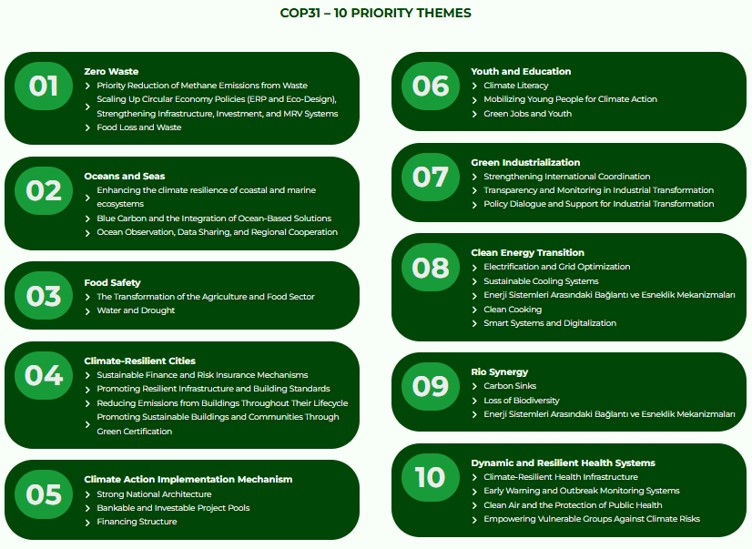
Cited as “ambitious outcomes”, the COP31 Presidency has set out its priorities for November’s next round. They are:
Less hard to abate
Often cited as one of those hard to abate sectors, the cement industry accounts for 8% of global emissions – but that may be about to change. A team of scientists from Stanford and Berkeley have developed a technique for cement manufacturing that is 100 times faster than traditional methods and doesn’t need fossil fuels. The innovation uses plasma, heated to 2,400C to heat the raw materials directly. Conversion of those materials to clinker takes only seconds. The heated plasma can be created using electricity, meaning no fossil fuels and there is considerably less wasted heat because of the speed of the process. While traditional methods operate at around 30%-40% thermal efficiency, the new process operates at 80%.
On site generation without combustion or emissions
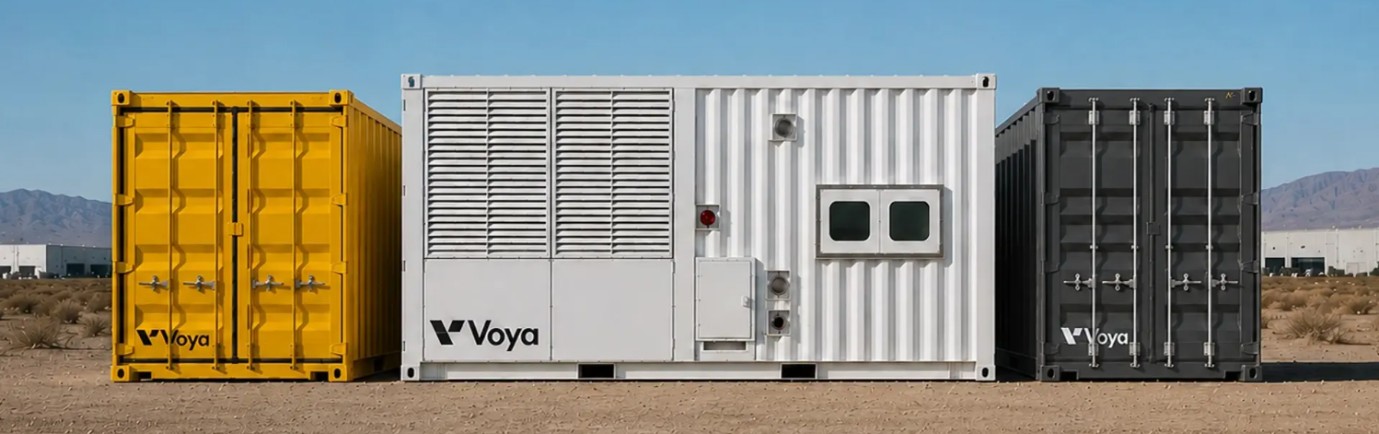
On site generation without combustion or emissions is being promised by Voya Energy (US). The electricity is electrochemically generated using aluminium pellets as its fuel, which can be produced from low grade scrap aluminium. The 20-foot container-sized units can produce up to 2MW, making the system around four times more compact than an equivalent diesel generation unit and 100 times more compact than batteries.
Food waste boosts heat transfer 96%
A team of scientists from South Korea and Singapore have developed a paper membrane that delivers a 96% improvement in heat transfer. The key ingredient is biochar created from food waste. The new membrane can help buildings with thermal management and energy recovery ventilation by storing and moving heat and it also helps with moisture control. The solution is based around a phase change material (docosane) which is stabilised by mixing with the biochar and graphene to prevent leakage when the docosane is in liquid form. The membrane showed a heat-storage rate 96% higher than the reference membrane while retaining 80% of the bulk composite’s latent heat.
Did you know …….
Lifts consume around 2%-5% of a building’s energy according to a new report from Finnish lift company, KONE. For older systems, this can get as high as 10%. KONE claims a modernisation programme can typically reuse 88% of the existing material, saving 78% of embodied emissions compared with complete replacement, while still saving 70% of the operating energy.