NZ on the outer, fire emissions down and a quantum leap

In this issue:
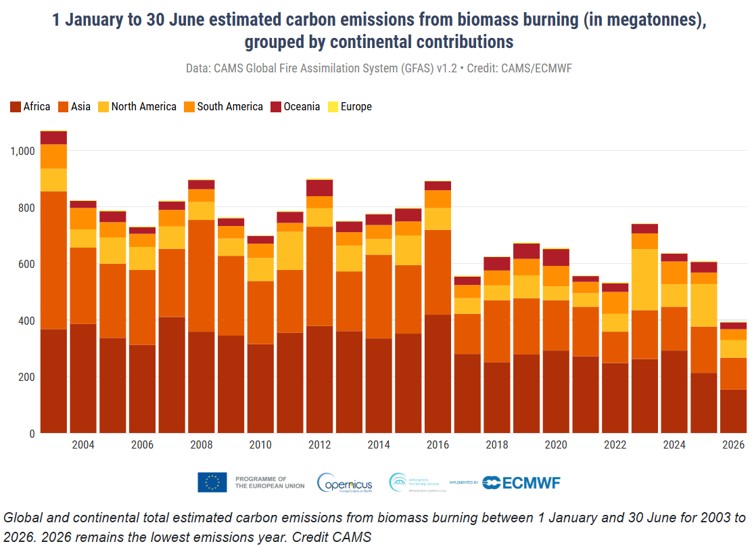
Fire emissions lowest in twenty years
Some good news this week out of Europe’s Copernicus Atmospheric Monitoring Service, which tells us emissions from burning biomass – for the most part wildfires – during the first half of the calendar year are running at the lowest level since 2003. However, the picture may be short lived, with a marked uptick in incidents during the final couple of weeks of June in North America and Europe.
NZ MIA (missing in action) - again
The IEA’s annual global conference on energy efficiency wound up last week and the outcome statement reiterated attendees’ commitment to doubling the global average annual rate of energy efficiency improvements by 2030 and to make “energy efficiency the cornerstone of energy policies”. That wording bears reflection. These countries are not saying “one of the cornerstones”, they are not saying “a key component”, they are saying the cornerstone, singular. Signatories include Canada, the EU (and separately, France, Germany, Ireland, Italy, Spain), Japan, Switzerland, South Korea and the UK. Notable for its absence is New Zealand.
The business benefits of efficiency
The IEA has recently published an analysis of the business benefits of energy efficiency. They extend far beyond saving a few dollars or molecules of CO2. Those listed include falls in maintenance costs, as much as 50%, improvements in productivity, as much as 30 cents for every dollar saved on the energy bill, reductions in defects and health and well being benefits. Worth a look.
A quantum leap in energy savings
Data centres are constantly in the news and quantum computing isn’t far behind. With the explosion in the number and size of data centres, eliminating wasted energy needs to be a key goal and the solution may not be found through the performance benefits of quantum computing but employing quantum sensors. Korean company, xDots, has launched a product called xEnergy which utilises quantum sensors (xSee) to capture extremely precise power consumption data. It claims this is the world’s first use of quantum technologies to drive energy efficiency. xSee captures consumption data to a precision of ±0.01% with the data processed through xEnergy. The combination is claimed to deliver 15%-30% energy savings in industrial applications. xDots is now targeting public facilities, manufacturing facilities and, of course, data centres.
Could Kiwirail diversify into generation?
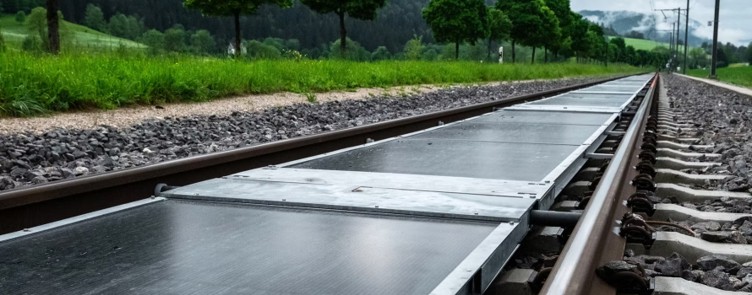
While state owned Kiwirail constantly struggles to maintain an expensive asset base, majority state owned power companies thrive. However, in Switzerland, Sun-ways has been trialling the use of solar panels between railway tracks with excellent results. The panels are built to be stronger than the average roof panel but operate in the same way. The installation allows for easy removal for track maintenance and the trains using the tracks have brushes underneath to keep the panels clean. Sun-ways claims the flat panels only lose around 10% of output relative to solar farm or roof, sloped panels. The trial has been running for 12 months with no substantial flaws emerging. The trial array runs for 100 metres and has generated 16,000 kWh in the year, enough to power a fully electric house in a temperate climate. The success of the trial has already seen interest from Italy, South Korea, Netherlands, China, India and Singapore. New Zealand has just over 4,000 kilometres of train line, potential power for 40,000 homes.
A new fan car
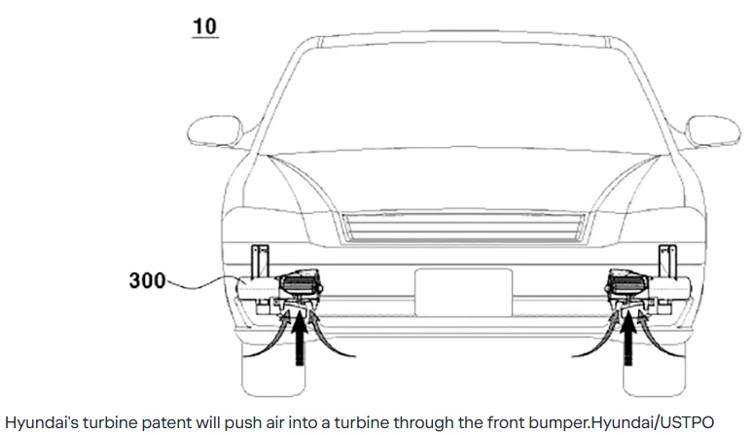
Hyundai has recently patented a wind turbine system for possible use to improve energy efficiency. The turbines sit behind the grille and use the vehicle’s movement to generate electricity at slower speeds, deployment at high speeds would use more energy than they would generate because of the drag they would create. The system is not intended to feed into the engine or drivetrain of the vehicle, rather it helps charge the battery in a similar way to regenerative braking, meaning less energy is drawn from the engine for that purpose leading to improved energy consumption.