
The impact of banning diesel trucks, free verifications and the most resilient capital

In this issue:
What if we banned diesel trucks?
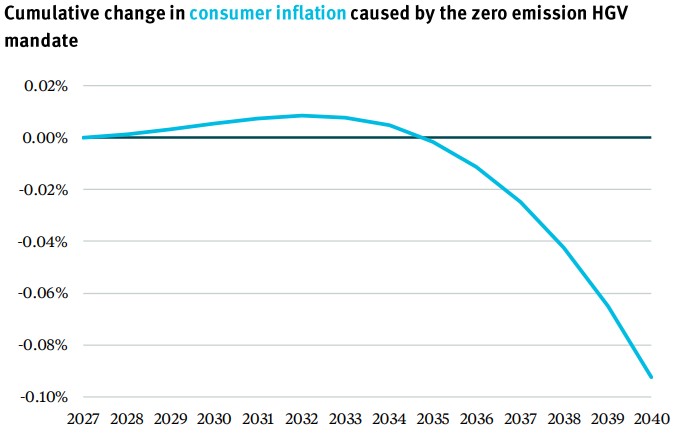
A great move for emissions, but what about freight costs and the impact on the economy? According to a new report from Green Alliance, such a move would reduce freight costs and inflationary pressures in the medium term. The report has been prepared in response to a UK government consultation on banning new diesel lorry sales by 2040. It concludes, despite higher up front costs, the overall impact would be a 7% decrease in inflation over the period 2027 to 2040.
Sustainability action improves margins, growth and resilience
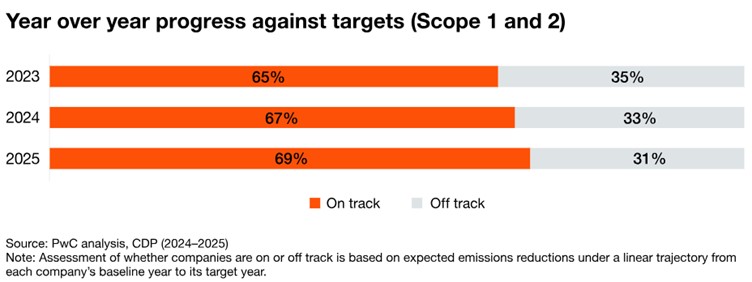
That’s the conclusion of PwC’s latest State of Decarbonisation report. Despite a backdrop of less corporate narrative around sustainability performance, actions have spoken louder than words. 82% of companies held steady or accelerated the timeline they need to achieve their stated ambitions and more companies are increasing their ambitions than decreasing them, 23% to 18% respectively. Meanwhile an increasing proportion of companies are indicating they are on track in assessing and addressing their Scope 1 and Scope 2 emissions.
0.5%
That’s the proportion of large financial institutions showing robust commitments to phasing out fossil fuels, according to a new report from World Benchmarking Alliance. The news isn’t all bad though, of the 400 institutions assessed, 37% are setting metrics and targets to monitor progress, although if financed activities (rather than internal activities) are included, that proportion falls to 26%. For those interested, the two institutions with robust commitments are ING and Zürcher Kantonalbank.
Data centre energy demand continuing to grow
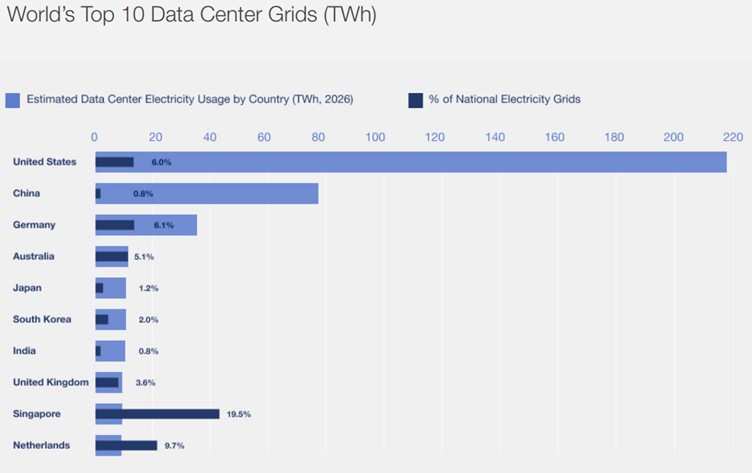
The latest analysis of data centre operations from the IDCA (International Data Centre Authority) reveals data centres now consume 67.7GW of electricity a year, around 2% of global demand. This is up from 1.7% in 2024. 43% of that demand sits in the US where centres account for 6% of the nation’s electricity demand. In Germany, centres consume 9.5% of national demand, in the Netherlands the figure is 9.7% but all are dwarfed by Singapore’s 19.5% of national demand.
3.5 gigatonnes
That’s the disparity between the annual emissions of the built environment and where it needs to be to achieve the IEA net zero emissions scenario. That equates to a 56% reduction in emissions needed by 2030 from a 2024 benchmark. Some progress is being made. The number of green building certificates issued tripled between 2015 and 2024 and building energy intensity, energy consumption relative to size, shrunk by 8.5%. The sector accounts for 37% of global emissions and adds an area the size of Paris to the building stock every week.
Free Project Verifications
The US Department of Energy, along with the National Laboratory of the Rockies (NLR) and Oak Ridge National Laboratory (ORNL) have just launched JUSTIFI, which is a free, open source app aimed at quantifying the benefits of energy efficiency projects. The app claims to encompass multiple benefits, such as productivity gains, quality enhancements, safety improvements, reduced downtime and lower maintenance costs as well as energy savings in its analysis, to help justify projects or evidence their efficacy. I’d be very interested to learn if people think it suitable for NZ.
Electrification staircase
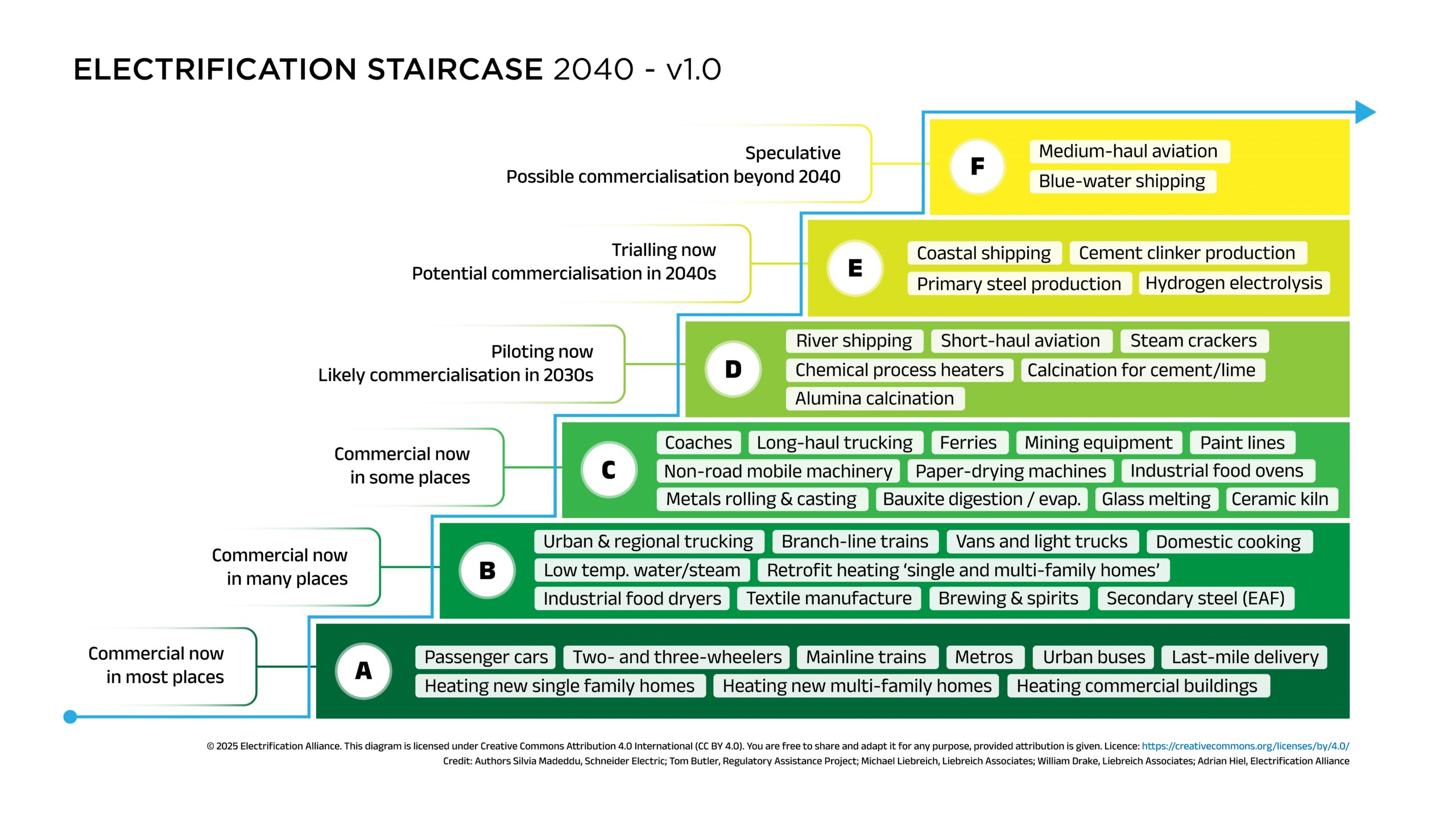
If you haven’t seen it, the Electrification Staircase from Electrification Alliance is a neat graphic simplification of areas for potential electrification, inversely time-ranked from the most practical now to those that will become viable in the medium term. Useful for presentations.
Happy Retirement
We were pleased this week to bid farewell to RCP 8.5, which has officially been retired. RCP 8.5 was the worst case scenario under the UNIPCC’s warming scenarios, the outcome associated with doing absolutely nothing. The global uptake in renewables has helped and RCP 8.5 has now been designated “implausible”. Of course, the White House has trumpeted this as evidence of the climate change “hoax”. The reality is it just means the probability of that very worst case eventuating is reduced. RCP 8.5 projected a temperature increase of 4.5C above pre-industrial levels by the end of the century. With RCP 8.5 gone, the new worst case scenario would see an increase of 3.5C, still catastrophic and well above the 1.5C and 2C targets commonly cited.
Did you know …..
Stockholm is the most climate resilient capital in Europe? That’s according to a new index prepared by COOLCITY which analysis just over 11,000 towns and cities across the EU for their climate resilience. Stockholm scored 6.7 on the index. The most resilient town is Piwniczna-Zdrój in Poland, which scored 8.5.