
Border adjustment prices, heatpumps better than LNG imports and solar ambulances

In this issue:
Heat pumps save billions on LNG costs
Analysis by the IEEFA has concluded the installation of domestic heatpumps in Germany between 2022 and 2025 has saved the country around €1.3 billion (NZ$2.6bn) on imported LNG over the 3 years, 2023-2025. It further concludes this reduction in import requirement has improved domestic energy security and that the country should forego increasing import capacity of LNG and focus on building more renewables and storage to further bolster security. A bigger scale than NZ and a different generation mix to start with but still interesting conclusions from which we might learn.
Alarming climate trends for the Arctic
The Arctic Report Card from the NOAA (National Oceanic and Atmospheric Administration, US) is now in its 20th year. The 2025 report reveals the highest recorded surface air temperatures since 1900 and confirms the region has warmed at more than double the global rate since 2006. Sea ice levels hit record lows and the oldest, thickest sea ice has declined 95% since the 1980s. August 2025 average sea surface temperatures were up 7C compared with the 1991-2020 August average. There are many more alarming data items but they are all consistent and with a clear conclusion of a huge transformation for the flora and fauna inhabiting the region.
The relentless charge of renewables
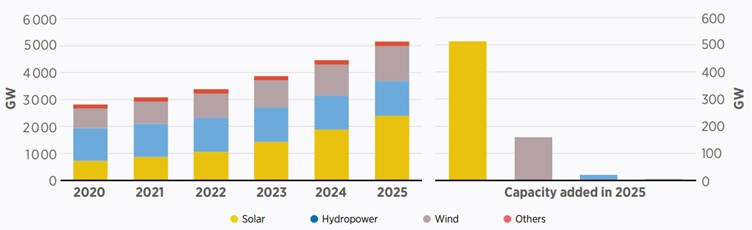
2025 was another bumper year for renewables, according to IRENA, with 692 GW of capacity added, an increase of 15.5%. Solar dominated, accounting for around 75% of the total growth. Renewables now account for 49.4% of overall capacity. Of that share, 47% is solar, 25% wind and 25% hydro with the remaining 3% made up by geothermal, bioenergy and marine combined.
Efficiency saving $millions
Members of the Smart Energy Coalition are again reporting saving many millions of dollars through efficiency improvements. Last year, the reported savings amounted to US$183 million (NZ$314m) from an average efficiency improvement of 8.6%. The global average is between 1% and 2%. The improvements lead to aggregated emissions reductions of around 60 million tonnes of CO2e. The Coalition includes major multinationals such as Danfoss, AstraZeneca and Siemens.
EU sets border adjustment price
The EU has just published the price for its Carbon Border Adjustment Mechanism Certificates for the first quarter of 2026 as €75.36 (NZ$151) per tonne, roughly in line with its current ETS price of around €80/t (NZ$160). Importers of qualifying products will be required to purchase certificates from February 2027.
Did you know …..
We should shortly see the world’s first ambulance entirely powered by solar energy? The Stella Juva project, from students at the Eindhoven University of Technology, expects to have the vehicle ready for demonstration by July. It is designed to run entirely on solar energy, which will power the vehicle and all its equipment, providing healthcare in remote regions lacking robust transport energy infrastructure.