Policies that work, vehicle emission standards and efficient hospitality

In this issue:
It’s election year – which policies actually work?
A group of European researchers has taken a look at which climate policies have actually delivered results over the last 32 years. Taking a sample of 47 sets pf policies (1,737 individual policies) across 40 countries, they identified 28 areas of action that consistently delivered results. Grouping these into categories, the list comprises:
- Carbon taxes: Including direct carbon taxes, emissions trading schemes, congestion charges and fossil fuel excise taxes;
- Energy efficiency and standards: Building codes, air emission standards, minimum energy performance standards and motorway speed limits;
- Renewable energy (and research): R&D expenditure on carbon capture, nuclear, hydrogen, energy efficiency and renewables, planning for renewable expansion and auction schemes;
- Reporting and accountability: Greenhouse gas emissions reporting;
- Fossil fuel subsidy reduction
Carbon taxes emerged as the most effective policy mechanism in the building and industrial sectors while elevating fossil fuel excise duties was the most effective measure in the energy sector. In transport, reporting just edged out congestion charging and R&D on efficiency.
Vehicle emission standards prove effective in Oz
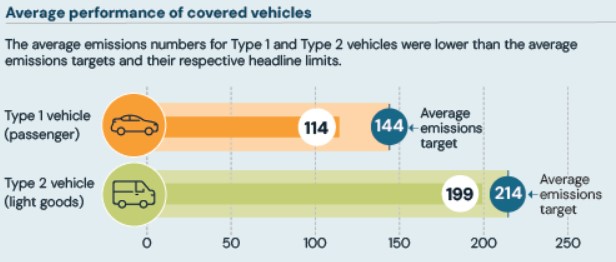
On 1st July last year Australia introduced a new vehicles emission scheme, the New Vehicle Efficiency Standard. It sets a benchmark for emissions across a manufacturer’s range. The initial benchmark was 144 grammes of CO2 per kilometre for cars and 214 g/km for vans. The benchmark will decrease each year. Manufacturers coming in below the benchmark across their sold range gain credits, those above fall into deficit. The credits can be traded. Because of fairly generous starting benchmarks, 40 of 59 manufacturers gained credits in the first 6 months of the scheme. The big winner was BYD who gained over 4 million credits, the biggest loser was Mazda who ended the period 500,000 in deficit. Most importantly, the scheme contributed to Australia’s first fall in transport emissions since Covid.
Performance standards make real impact
Most of us have heard of the success of the NABERS scheme in Australia, where it is widely mandated. However, new research from the Netherlands informs us material benefits from strong energy performance can be realised even with limited enforcement. Regulations requiring a specified minimum level of performance in office buildings were introduced in 2018, with compliance required by 2023. Improvements began immediately and the researchers report a 21.8% increase in property values, an increase that was seemingly independent of rental rates and not experienced among properties not captured under the standard (non-office buildings). Their conclusion was that minimum energy performance standards can stimulate energy efficiency investments and be capitalised into asset values.
80% of large corporates seeking Scope 3 data
That’s the conclusion of the latest CDP publication on supply chain sustainability. Across businesses of all sizes, the number is 61%, up from 41% in 2023. Of course, these samples are biased, coming from CDP participants rather than random sampling but, even so, the trend is clear and further reflected in an increase in companies setting mandates for suppliers, up from 70% to 76% in the same period.
Hospitality efficiency
The hospitality sector in New Zealand is struggling, Wellington’s is collapsing. So, maybe it’s time to follow an example from the UK where the government has initiated a scheme to drive efficiency – and profitability – in the sector. The scheme, delivered by Zero Carbon Services, has helped hospitality businesses save an average £2,500 (NZ$5,700) a year on energy bills over a 12 month trial through free access to an energy efficiency and carbon reduction tool. The scheme is now being rolled out to a wider group. Maybe NZ should get a licence and pilot across Wellington.
Digital retrofits save 18%
A recent white paper from Schneider Electric outlines how a digital retrofit could save up to 18% on hospital energy bills and improve resilience. The paper uses data from 7 hospital locations around the world covering different climatic conditions.
Did you know ........
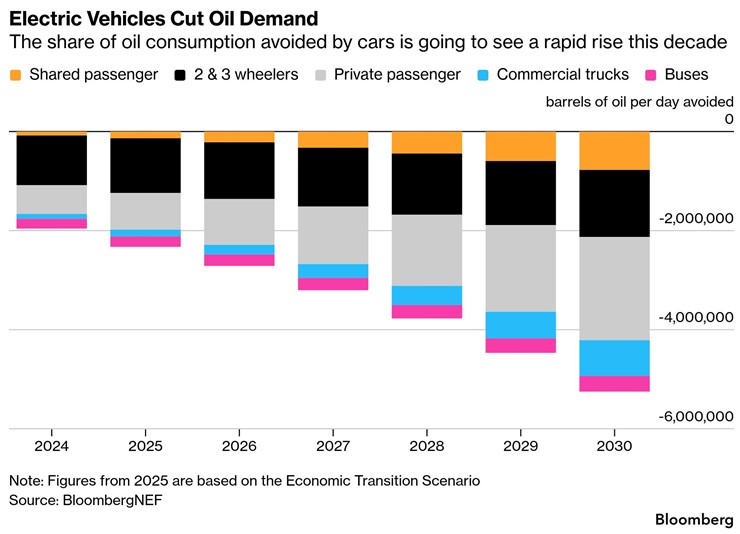
EVs avoided the consumption of 840 million barrels of oil in 2025?
New Zealand has seen a surge of interest in EVs in the last few weeks and it’s plain to see why. But the global trend to EVs has delivered material benefit under the current oil delivery crisis. BloombergNEF estimates EVs avoided the consumption of 2.3 million barrels of oil each day in 2025. The trend is expected to continue with a predicted 5.25 million barrels per day (nearly 2 billion a year) avoided by 2030.