Slashing energy bills, green economy to grow 40% and military emission

In this issue:
How to reduce average household energy bills by 67%
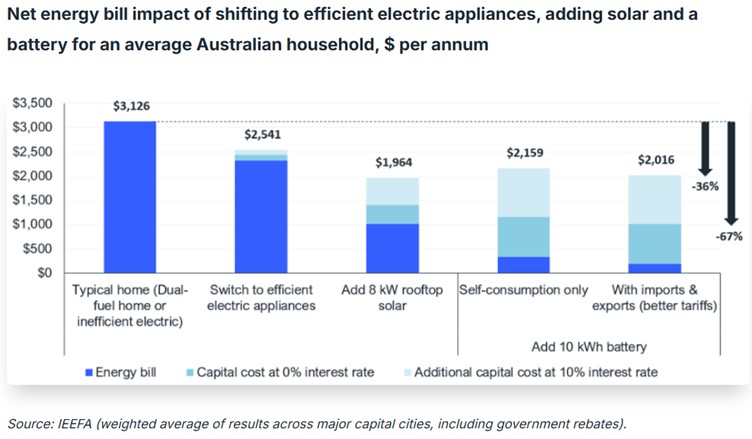
It’s a common perception that the transition to a net zero economy will come with higher electricity costs. New research from the IEEFA suggests the reverse is true and that pursuit of affordability is entirely consistent with that of lower emissions. The research looks at the Australian market and incentives and concludes the keys to driving costs down are efficiency, electrification and residential generation. Working together, these have the potential to reduce domestic costs by an average 67%.
Green economy to grow 40% by 2030
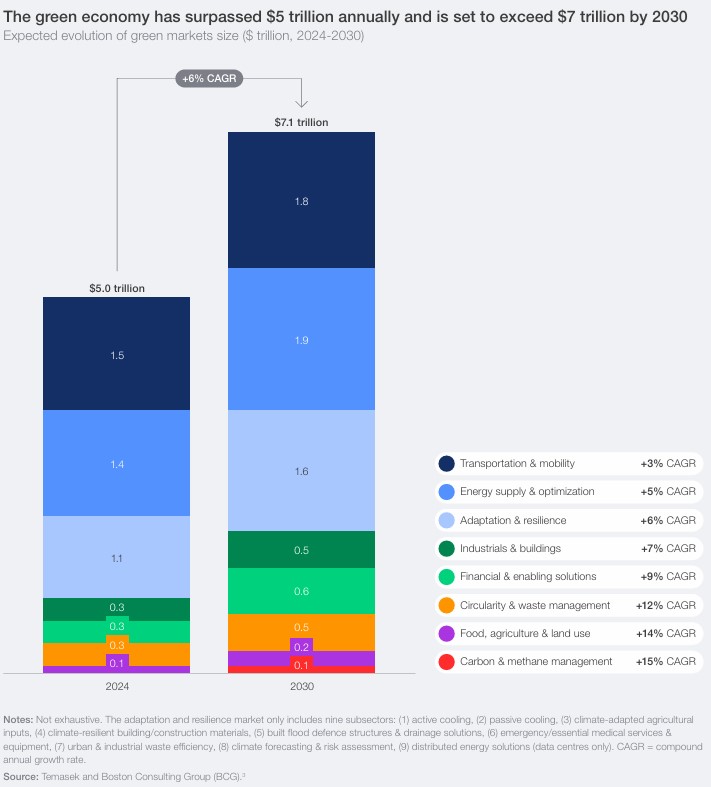
The value of global green economy is around US$5 trillion (NZ$8.7trn) a year at the moment but is predicted to increase to US$7trn (NZ$12.1trn) by 2030, according to a new report from the World Economic Forum and BCG. Green revenue streams have grown at twice the rate of conventional revenue streams over the last few years. Companies operating in the sector are able to secure cheaper financing and enjoy higher valuations. Shares in companies with more than half their revenue from green markets are trading at around a 12% to 15% premium.
CEOs getting back on track
A new survey of 35,000 CEO statements by Bain and Company concludes interest and action on sustainability is being elevated back up corporate agendas. It seems there is also a shift in how it is being viewed, pivoting from being a moral issue to a commercial one. After a Covid dip in interest, between 2022 and 2025 10% of companies increased their sustainability ambitions while only 4% scaled back. Two thirds of CEOs indicate they are on track for their Scope 1 and 2 emissions reductions.
Major UK companies called out
Actions speak louder than words and it seems words are plentiful amongst the UK’s leading corporates but actions are not following. In an analysis of FTSE250 companies, edenseven is reporting little progress on decarbonisation despite several years of disclosures and numerous pledges. Even though 58% of companies have operational net zero pledges, only 30% have validated, short-term targets and only 18% validated, long-term targets. It seems 40% of the companies still use little or no renewables and energy efficiency has only improved 4% in the period 2022-24.
SAF a step closer
The first commercial scale plant to produce SAF from ethanol has delivered its first litres. Unlike most SAF projects, which rely on often limited-supply feedstocks such as used cooking oil, the LanzaJet facility in Soperton, Georgia can use a broad range of feedstocks, such as agricultural residues, energy crops, municipal solid waste and captured carbon. Of course, LanzaJet is on offshoot of LanzaTech, originally founded in New Zealand.
Your high tech may be costing you
Adaptive cruise control is much vaunted as a hi-tech, modern safety feature but it does come with a cost. A study by researchers from Argonne National Laboratory (US) has revealed use of adaptive cruise control increases energy use by 2.5% in EVs. Apparently, that is a lower penalty than use in a combustion engine vehicle but still something to think about.
Did you know …
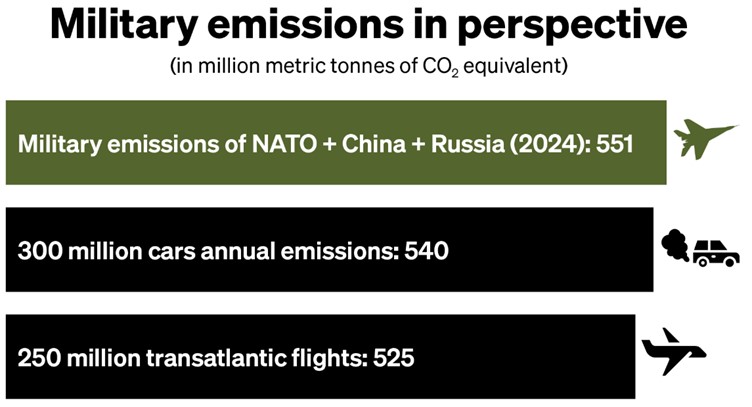
The combined military emissions of NATO, China and Russia exceeds those of 300 million cars, 250 million transatlantic flights or seven times that of New Zealand?